Basement Leak Detection in Clifton, NJ
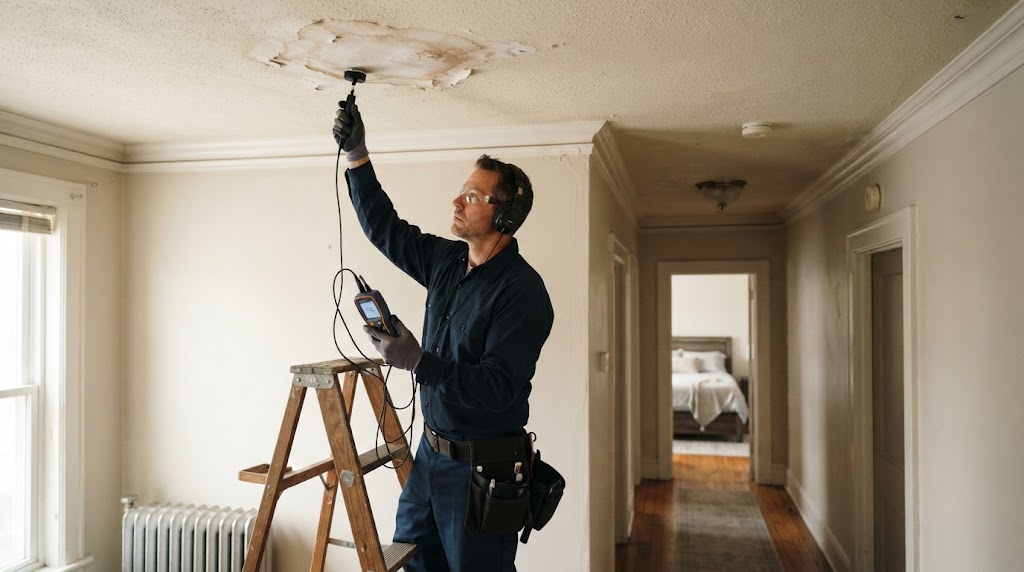
Finding water in your basement can be incredibly stressful, particularly if your basement is finished. In Clifton, many homes feature older basements that house the property's critical plumbing systems. The key to resolving a wet basement leak in Clifton NJ is identifying the exact source of the moisture: is it a plumbing issue or groundwater seepage?
Plumbing Leaks vs. Groundwater
Proper basement leak detection Clifton NJ involves distinguishing between internal and external water sources. How plumbing leaks differ from outside water intrusion is vital information.
Plumbing Leaks: These include failures in supply lines, drain lines, or water heater connections. If you have a basement pipe leak in Clifton, the water is coming from a pressurized system or a drainage failure inside the home. These leaks are active, can be tied to water meter movement, and often leave specific types of ceiling or wall stains beneath bathrooms or kitchens.
Groundwater Seepage: This is outside water penetrating through the foundation due to hydrostatic pressure, poor grading, or a failed sump system. It typically occurs during or after heavy rain or snowmelt.
Common Basement Plumbing Issues
When investigating a water in basement plumbing leak in Clifton, we look closely at several usual suspects. Supply lines running across the basement ceiling can develop pinhole leaks. Drain lines and floor drains can back up or crack. Sump-related issues might mimic a plumbing leak if the pump fails to discharge water correctly, causing it to pool on the floor. Additionally, water heater tanks can deteriorate and leak from the base or the pressure relief valve.
How Source Identification Works
We use a comprehensive diagnostic approach to find the source before opening walls. If you have a finished basement, tearing out drywall blindly is costly. By using thermal imaging and moisture meters, we can trace wet basement walls or ceiling stains back to their origin. If we suspect a supply line, pressure testing confirms the loss of water. For drain issues, camera inspections provide a clear view of the pipe's interior.
What Happens After Detection?
Once we identify whether you are dealing with a compromised pipe, a failed fitting, or another plumbing issue, we will explain the necessary steps to resolve it. If the issue is plumbing-related, we can proceed with targeted repairs. If the diagnostics indicate groundwater seepage, we can advise you on consulting a foundation or waterproofing specialist.
Frequently Asked Questions
How can I tell whether a basement wall is wet because of plumbing or outside water?
If the moisture appears only after heavy rain, it is likely groundwater. If the wall is constantly wet or damp regardless of the weather, or if your water meter is running, it is likely a plumbing leak.
Do I need to remove my finished basement walls to find a pipe leak?
Not initially. We use non-invasive tools to scan the walls and locate the most likely source of the leak, limiting the area that needs to be removed for the actual repair.
Could my water heater be causing the puddle on the floor?
Yes, water heaters are a common source of basement water. Leaking valves, corroded tank bases, or loose connections can all cause pooling water around the unit.